Nvidia just became the most valuable company in the history of public markets. On May 13 2026 the stock closed at $225.83, pushing the chipmaker's market cap to $5.4 trillion. No company — not Apple at its peak, not Microsoft, not Aramco at its IPO — has ever held that line. The single number that anchors the story: $5.4 trillion. The single number Nvidia is currently doing in China: zero.
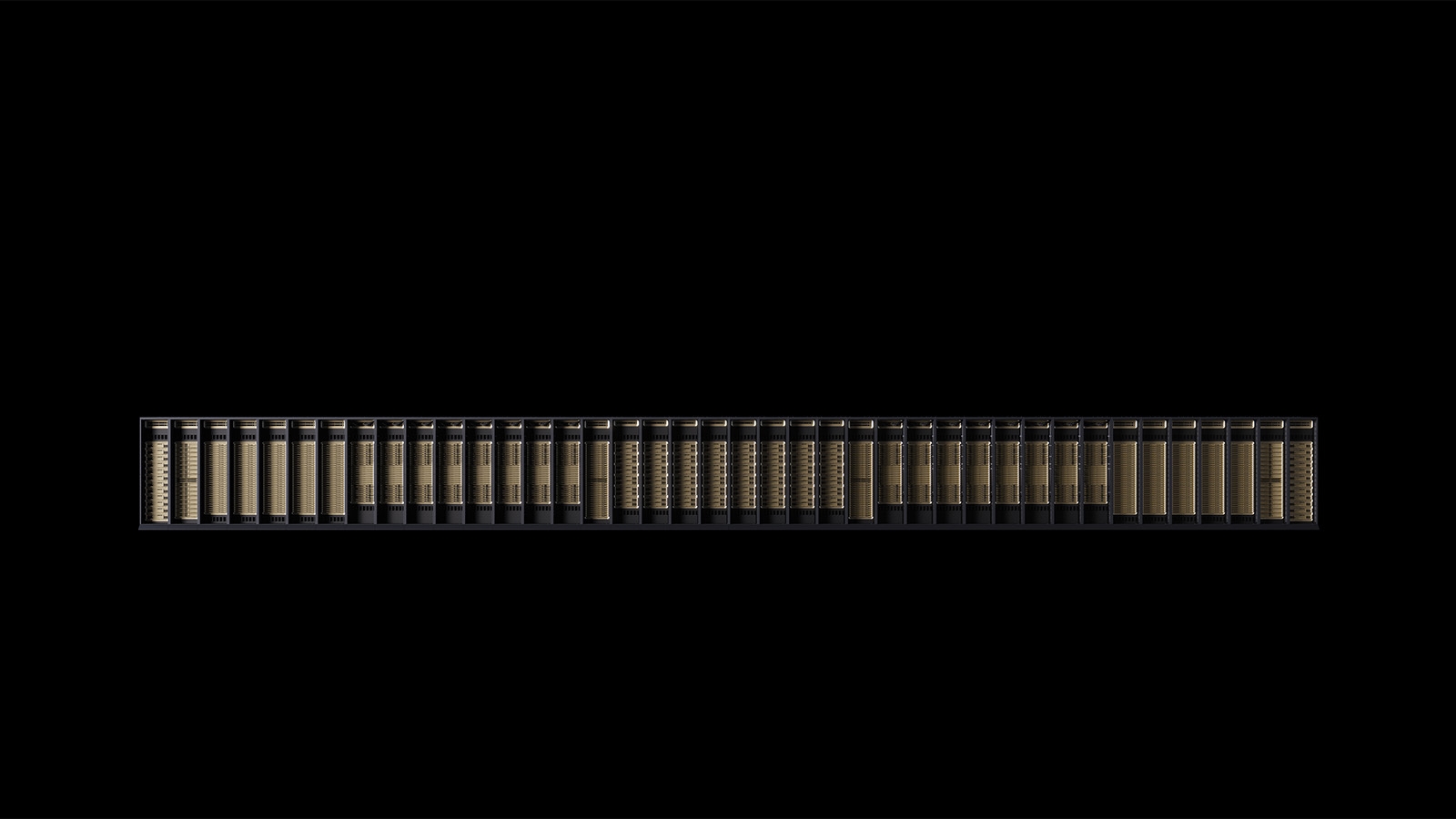
The headline coverage will tell you Nvidia hit the milestone because Vera Rubin, its next-generation AI platform, just locked in a delivery schedule. Trial production starts in June; the first racks ship to Microsoft, Google, Amazon, Meta and Oracle in July. That part is true. But the part the headlines aren't connecting is structural: Nvidia is no longer just the vendor selling chips to the AI industry. Nvidia is also the largest equity investor in the company that buys the most chips. The vendor is the bank.
The numbers. Nvidia has committed more than $40 billion to AI equity investments in 2026 alone. The single largest line in that book is the $30 billion check it cut to OpenAI in late February — paired with multi-year compute commitments and silicon roadmap alignment. Bloomberg has been quietly cataloguing the loop: Microsoft and Nvidia fund OpenAI, OpenAI books compute purchases at Microsoft and Nvidia, the revenue lifts both. This week alone Nvidia agreed to put up to $3.2B into Corning, the glass maker that supplies optical components for its racks, and up to $2.1B into IREN, a data-center operator. Same pattern: invest in the buildings that house the chips that train the models from the companies Nvidia also funds.
The backstory. Twelve months ago Nvidia was a $3 trillion company. Six months ago it crossed $5 trillion. The April 2026 leg was actually weaker than the rest of the semis — the iShares Semiconductor ETF had its best month on record while NVDA gained 14%. The market spent six weeks rotating into AMD, Intel and Micron, on the theory that Nvidia's dominance was already priced. The Vera Rubin production confirmation reversed the rotation in three sessions. And Jensen Huang told investors in March that the $30B OpenAI investment "might be the last time" the company invests in the startup — a line worth reading twice.
The countervailing angle. When the largest investor in your biggest customer is also your chip supplier, the demand signal you're reading is no longer a market signal. It's a balance-sheet construction. CFO Colette Kress conceded on the China question that "we do not know whether any imports will be allowed." Roughly $17 billion in annual revenue is sitting on the wrong side of an export wall. The stock hit $5.4T anyway. That tells you the market has fully discounted China — and it tells you what happens if any waiver actually lands.
What to watch. May 20: fiscal Q1 2027 earnings. Watch for guidance on Vera Rubin unit economics and any management language about China. July: first Vera Rubin racks ship — the first proof that the four-times inference efficiency claim against Blackwell holds in production. Q3: AMD's MI400 series, Google's next TPU and Amazon's Trainium 3 are all on roadmaps; none has yet shipped at Nvidia's scale, price and supply. Until one of those three lines closes, the rotation story keeps failing.
The line to screenshot: Nvidia is no longer selling picks and shovels. Nvidia is the bank that funds the gold rush.
Sources
- 1.Yahoo Finance — Nvidia's $5.4 Trillion Moment Hides A Much Bigger Story About China · May 13, 2026
- 2.CNBC — Nvidia embraces role of AI investor, pushing past $40 billion in equity bets this year · May 9, 2026
- 3.NVIDIA Newsroom — NVIDIA Vera Rubin Opens Agentic AI Frontier · Mar 16, 2026
- 4.Wccftech — NVIDIA Squashes Vera Rubin Rumors, First Shipments Rolling Out In July To Major AI Customers · May 12, 2026
- 5.Bloomberg — AI Circular Deals: How Microsoft, OpenAI and Nvidia Keep Paying Each Other · May 8, 2026
- 6.CNBC — Google races to put Gemini at the center of Android before Apple's AI reboot · May 12, 2026